The Art of Tasting EVO Oil
Tasting extra virgin olive oil is a sensory experience that engages sight, smell and taste. Learning to recognise a quality oil means fully appreciating the heritage of the Italian olive-oil tradition and making informed choices for your table.
The Three Stages of Tasting
1. Visual Examination
Contrary to what you might think, the colour of the oil is not an indicator of quality. The shades, ranging from intense green to golden yellow, depend on the variety of olives and the moment of harvest. An oil may be slightly cloudy or clear: both characteristics are acceptable.
2. Olfactory Examination
Pour a small amount of oil into a glass (ideally the blue tasting glass, which masks the colour). Warm the glass with the palm of your hand for a few seconds, then bring your nose close and inhale deeply. A quality EVO oil releases:
- Fruitiness: notes of fresh olive, which may be light, medium or intense
- Grassy hints: freshly cut grass, artichoke, green tomato
- Aromatic notes: almond, green apple, aromatic herbs
3. Taste Examination
Sip a small amount of oil and spread it across your entire palate. Draw air through your teeth to oxygenate the oil and release all its aromas. The three fundamental positive characteristics are:
- Bitterness: perceived on the tongue, it indicates the presence of polyphenols and antioxidants
- Pungency: felt in the throat, a sign of freshness and a richness in oleocanthal
- Fruitiness: the whole of the olfactory sensations perceived retronasally
Defects to Avoid
A poor-quality oil has recognisable defects:
- Rancid: a smell of old nut or oxidised fat
- Mould: a hint of a damp cellar
- Winey: acetic or wine-like notes
- Fusty (heated): a sensation of hay or damp wood
If you detect one of these defects, the oil is not a quality extra virgin.
Food Pairings
Every oil has its ideal pairing, depending on how intense its fruitiness is:
Light Fruitiness
- Steamed or grilled fish
- Carpaccios and tartares
- Delicate salads
- Mayonnaise and cold sauces
Medium Fruitiness
- Bruschetta and fettunta
- Pulse soups
- Grilled vegetables
- Pasta with light sauces
Intense Fruitiness
- Bistecca alla fiorentina
- Tuscan ribollita
- Mature cheeses
- Panzanella
Storage to Maintain Quality
To preserve the organoleptic characteristics of your oil:
- Store it in a cool, dark place, away from heat sources
- Use dark glass or stainless steel containers
- Always close the cap tightly after use
- Consume preferably within 12-18 months of milling
Discover Our Oil
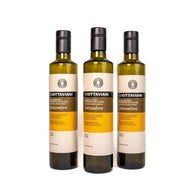
At our mill in Villa San Giovanni in Tuscia we produce extra virgin olive oil following traditional methods that bring out the characteristics of the Caninese cultivar. Every bottle tells the story of our land and our passion.
Want to taste the difference? Explore our selection of oils and discover the authentic flavour of the Viterbo Tuscia.